Every few months I go down a rabbit hole trying to calculate what I spend on drum heads in a year. The number is always more than I expect, and I always convince myself it’s fine. It’s fine. I’m a drummer. This is just what we do.
If you’ve never done this calculation, or if you’ve been putting off a change because you don’t want to face the bill, let me lay it out for you. This is a real kit, real usage, real prices in CAD — no fluff, no sponsored opinion.
The kit
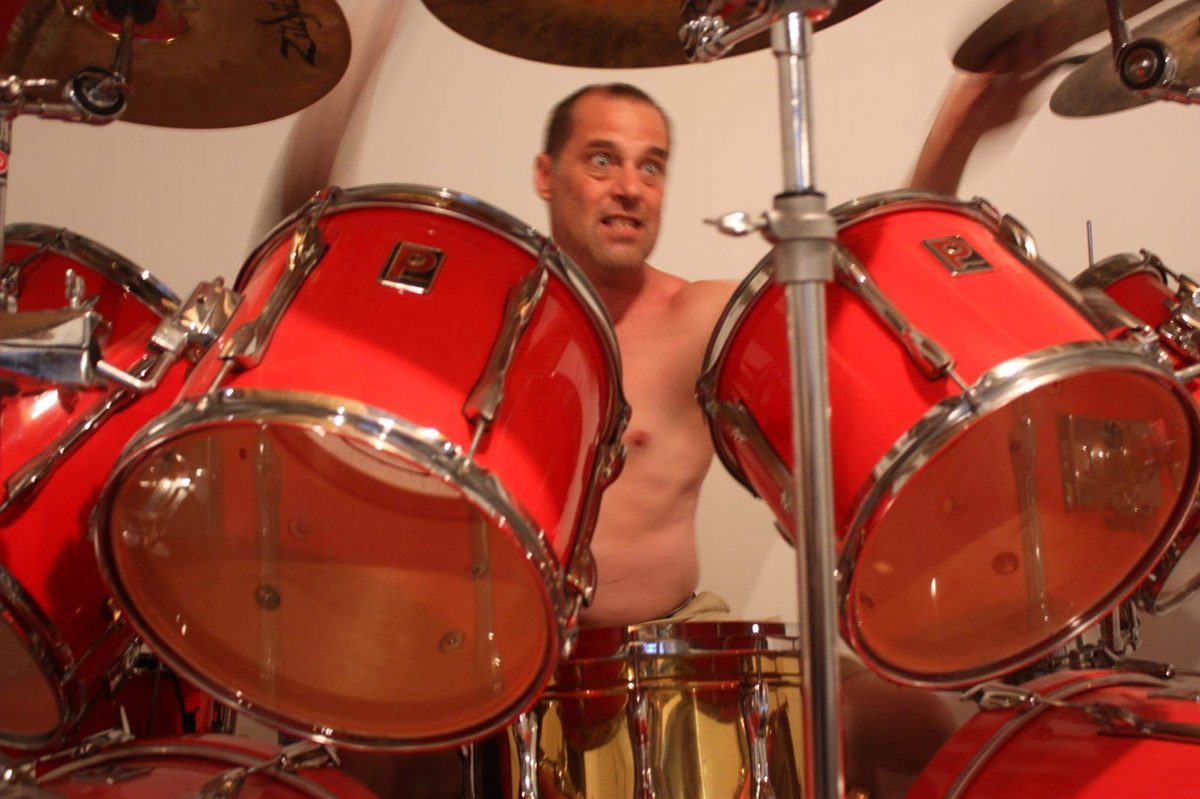
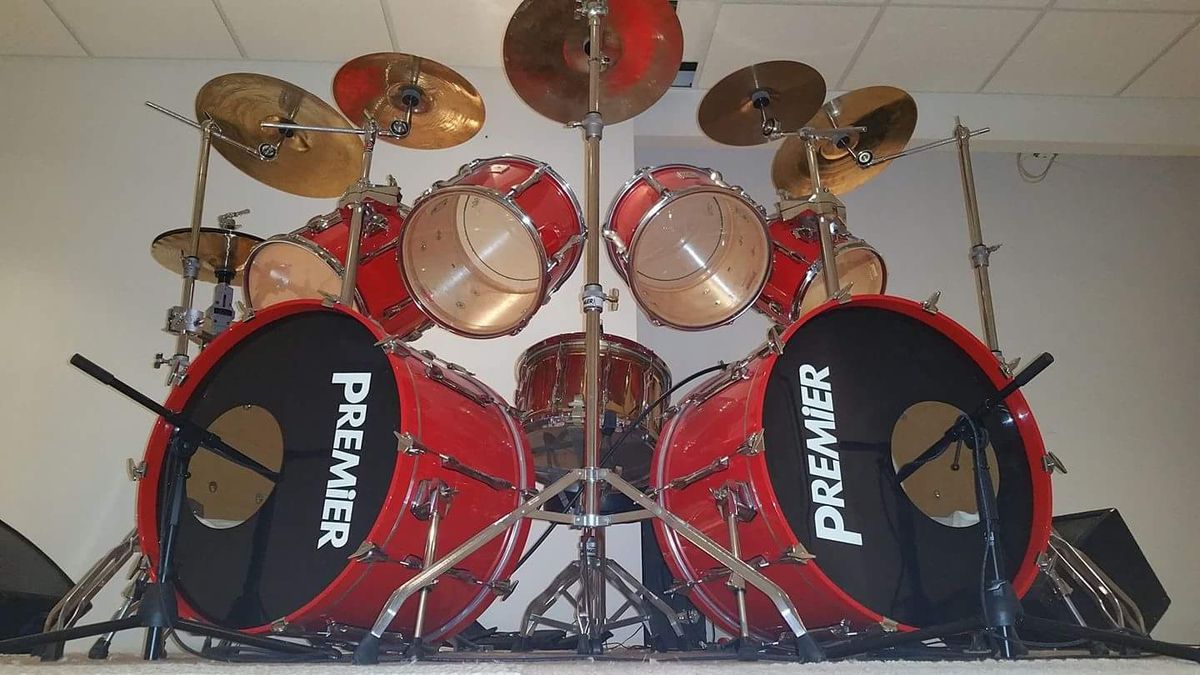
I play a Premier 10-piece double-bass kit in red sparkle. Tom configuration is 10”, 12”, 13”, 14”, 16”, and 18”. Two kick drums at 24”. One snare at 14”. That’s a lot of plastic to keep fresh.
The rehearsal schedule is irregular — more intense leading up to a gig, quieter between. We’re not a working-six-nights-a-week cover band. We write originals, rehearse, and gig when we gig. That probably means 3–5 hitting sessions per week at average. Some months more, some less.
How I know it’s time
Nobody taught me a mileage rule. I learned by listening. Here’s what dead heads sound like on each part of the kit:
Toms: The sound goes flat and plasticky. You lose the punchy, full-bodied attack and it starts sounding like you’re hitting cardboard. Sometimes there’s a weird ring that won’t tune out. That’s the Mylar losing its elasticity — it’s not coming back with a tuning key.
Kicks: The batter gets dented in a consistent impact zone, usually slightly off-center. When the dent is deep enough that you can feel it buckle under the beater, it’s gone. The tone gets boxy and one-dimensional. No low-end bloom, just thud.
Snare: The batter wears unevenly and starts sounding choked. The snare-side reso is easy to ignore because you never look at it — but when the bottom head goes, you lose the crack, and no amount of snare wire adjustment will fix it.
What I actually run
Tom batters. I run Remo Pinstripe Clears on top. On a kit this size, with regular rehearsals and the occasional gig, I get roughly six months out of the batters before the sound starts going flat. In Alberta’s dry air, the Mylar dries out and becomes brittle faster than it would in a coastal climate. Six months is optimistic here.
Tom resos. I use Remo Ambassadors on the bottom. I aim for a year, but they rarely make it. When the resos go dead, the toms lose their sustain and start sounding strangled. You know it when you hear it.
Kick batters. I’ve been running an Evans EMAD Heavyweight 24” on the kicks rather than my usual Remo, trying something different. Honest verdict: it’s okay, but I’m not getting the thud I want. Going back next change. On kicks I only replace the batter — the front head stays until it tears or until I want to change the sound.
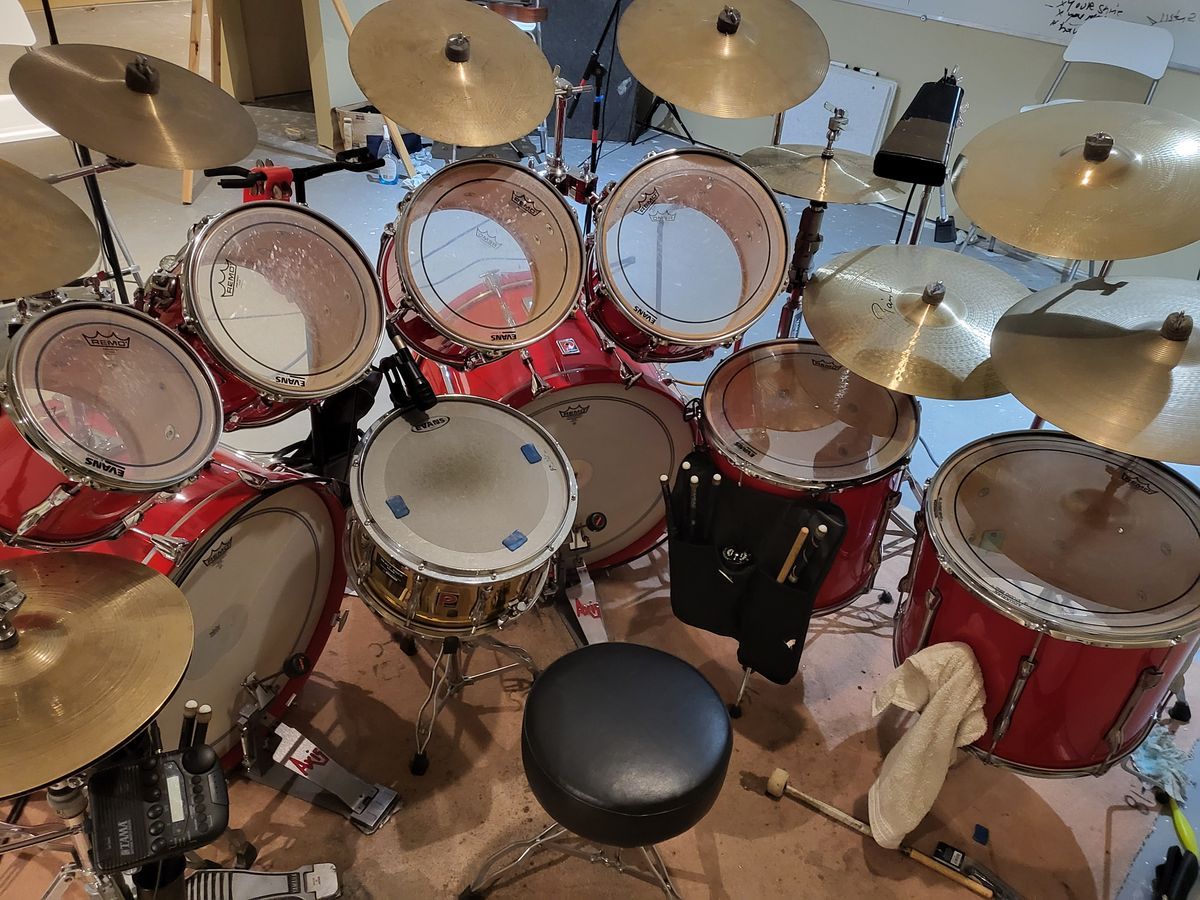
Tom batters. I run Remo Pinstripe Clears on top. On a kit this size, with regular rehearsals and the occasional gig, I get roughly six months out of the batters before the sound starts going flat. In Alberta’s dry air, the Mylar dries out and becomes brittle faster than it would in a coastal climate. Six months is optimistic here.
Tom resos. I use Remo Ambassadors on the bottom. I aim for a year, but they rarely make it. When the resos go dead, the toms lose their sustain and start sounding strangled. You know it when you hear it.
Kick batters. I’ve been running an Evans EMAD Heavyweight 24” on the kicks rather than my usual Remo, trying something different. Honest verdict: it’s okay, but I’m not getting the thud I want. Going back next change. On kicks I only replace the batter — the front head stays until it tears or until I want to change the sound.
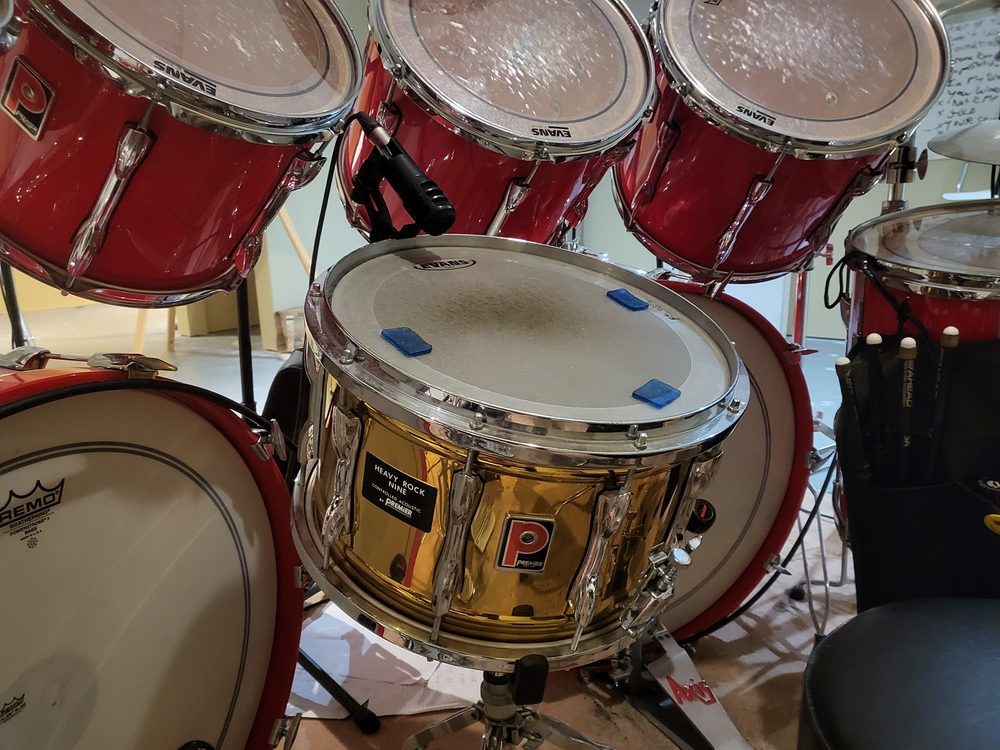
Snare. The snare batter I can feel wearing down — it goes smooth in the center strike zone and starts sounding choked. The snare-side reso is easy to neglect, but it matters more than most people think. When the bottom head goes, you lose the snap — no tuning trick gets it back.
Sticks. I play Ahead composite sticks. They’re pricier upfront but outlast wood sticks by a long way. The vinyl sheath wears down before the stick itself does — you’ll feel it go slick in your grip — but replacement tips are cheap and the shaft stays straight. The smaller beads give you a crisp tick on the hi-hat that I actually prefer over a big nylon tip. I don’t snap them in half. That alone justifies the cost if you play hard.
The actual cost breakdown
Here’s what a full kit change costs me at current prices, approximately in CAD. I’ve broken out batters and resos separately because most of the time I change them on different schedules.
| What | Qty | Est. unit (CAD) | Total | How often |
|---|---|---|---|---|
| Tom batters (Pinstripe) | 6 | $25–32 | $150–$192 | ~6 months |
| Tom resos (Ambassador) | 6 | $18–24 | $108–$144 | ~12 months |
| Kick batters (24”) | 2 | $55–75 | $110–$150 | ~12 months |
| Snare batter | 1 | $28–38 | $28–$38 | ~8 months |
| Snare reso | 1 | $18–25 | $18–$25 | ~12 months |
| Full kit change (batters + resos) | 16 | — | $414–$549 | ~12 months |
| Tom batters only (most common) | 6 | — | $150–$192 | ~6 months |
The Alberta factor. Our climate is brutally dry — low humidity year-round, especially in winter when the furnace is running. Mylar drumheads are moisture-sensitive. They dry out and lose their elasticity faster here than they would in coastal BC or anywhere with consistent humidity. If you’re in Alberta and your heads seem to die faster than the timelines you read online, you’re not imagining it. The environment is getting them.
Should you change batters and resos at the same time?
Usually no. Resos last longer because they take less direct impact. The exception is if you’re going into a recording session or a high-stakes gig — change everything then, because you want every head to be broken in and consistent. Nothing worse than a brand-new batter that hasn’t settled yet next to a reso that’s been on for a year.
For rehearsal and regular gigs, I change batters when they start sounding wrong and change resos on a longer cycle. They’re on different maintenance schedules, same as tire rotation vs. oil changes.
The question I always get: can you make them last longer?
Honestly? Not much. You can wipe them down after a session to remove stick residue and oils from your hands — that helps a little. Some drummers use head savers (small adhesive patches on the primary strike zone of the batter) to delay wear, but they affect the sound and I don’t bother with them on toms. On kicks, a patch or impact pad on the batter is standard practice and doesn’t hurt the tone.
You can’t really “restore” a dead head. The Mylar is stretched and the mass distribution has shifted. It’s done. No amount of moon gel or tuning will get back what’s gone. Buy new heads.
The honest number
In a normal year, I spend somewhere between $350 and $500 CAD on heads, depending on how often I change the resos and whether I need to replace both kicks. Some years it’s cheaper (light gig schedule, lucky on lifespan). Some years it’s more (broke a front head on a kick, did a full change before a recording session).
It’s just the cost of playing drums seriously. There’s no hack. Budget for it and stop being surprised every time it comes around.
← Back to articles